
What Is CRITI and Its Impact on Employee Benefits
- Sydney Little
- a few seconds ago
- 7 min read

More than 60 percent of American workers say their satisfaction depends not just on pay, but on the quality of benefits they receive. For benefits administrators in non-profit assisted living facilities across the Southeast, finding smart ways to balance cost and care is essential. This article explores how the CRITI framework can guide you in designing adaptable benefit packages that fit both tight budgets and your employees’ changing needs.
Table of Contents
Key Takeaways
Point | Details |
Understanding CRITI | CRITI is essential for optimizing employee compensation strategies, focusing on comprehensive reward systems to boost motivation and retention. |
Types of CRITI Programs | Employers can implement various CRITI programs, including recognition-based, professional development, and performance-aligned compensation initiatives to enhance workforce management. |
Cost Reduction Strategies | CRITI strategies leverage data-driven approaches to lower healthcare costs while improving employee health outcomes through personalized management programs. |
Legal Compliance Requirements | Adhering to federal regulations such as ACA and ERISA is crucial for implementing compliant CRITI programs, ensuring clear eligibility criteria and proper documentation. |
CRITI Defined in Employee Benefits Context
CRITI represents a critical framework for analyzing and optimizing employee compensation strategies within organizational benefit structures. This approach focuses on understanding how comprehensive reward systems impact worker motivation, retention, and overall organizational performance. By integrating financial considerations with human resource management principles, CRITI provides employers a sophisticated method for designing competitive employee benefits programs.
At its core, CRITI examines multiple dimensions of employee compensation beyond traditional salary structures. These dimensions include direct financial remuneration, indirect benefits like health insurance and retirement plans, and strategic incentives that align employee performance with organizational goals. Employers utilizing CRITI can develop nuanced compensation packages that address workforce diversity, generational expectations, and changing workplace dynamics.
The methodology breaks down employee benefits into quantifiable components, allowing organizations to systematically evaluate their compensation strategies. Key elements typically include healthcare coverage, retirement contributions, professional development opportunities, work-life balance initiatives, and performance-based incentives. By analyzing these components holistically, organizations can create more targeted and effective benefit structures that simultaneously control costs and enhance employee satisfaction.
Pro tip: Conduct regular benchmarking of your benefits package against industry standards to ensure competitiveness and employee retention.
Types of CRITI Programs for Employers
CRITI programs for employers encompass a diverse range of strategic approaches designed to optimize employee benefits and organizational performance. These programs are typically categorized into several key types that address different aspects of workforce management and compensation. Certificate programs offer employers targeted options for skill development, leadership training, and compliance education.

The primary types of CRITI programs include recognition-based initiatives, professional development tracks, and performance-aligned compensation strategies. Recognition programs can be further subdivided into peer-to-peer, managerial, and milestone recognition approaches. Each type serves a unique purpose in motivating employees and aligning individual achievements with organizational objectives. Professional development CRITI programs focus on continuous learning, offering structured training modules that help employees enhance their skills and grow within the organization.
Performance-based CRITI programs are particularly sophisticated, integrating comprehensive evaluation metrics with targeted compensation strategies. These programs typically include elements like merit-based bonuses, career progression pathways, and tailored incentive structures that directly link individual performance to organizational goals. By creating transparent and motivational compensation frameworks, employers can effectively drive employee engagement, productivity, and long-term organizational success.
Here’s a summary of how different CRITI program types address specific workforce objectives:
CRITI Program Type | Primary Objective | Typical Implementation Example |
Recognition-Based | Boost morale and retention | Peer-to-peer awards for achievements |
Professional Development | Enhance employee skillsets | Structured leadership training tracks |
Performance-Based | Align pay with outcomes | Merit-based bonuses and incentives |
Pro tip: Implement a flexible CRITI program that can be customized to address the unique needs and motivations of different employee segments within your organization.
How CRITI Strategies Lower Healthcare Costs
CRITI strategies offer innovative approaches to systematically reduce healthcare expenditures for organizations by implementing data-driven and proactive management techniques. Value-based care models prioritize health outcomes that fundamentally transform how employers approach medical spending, moving beyond traditional cost-containment methods to create more sustainable and efficient healthcare programs.
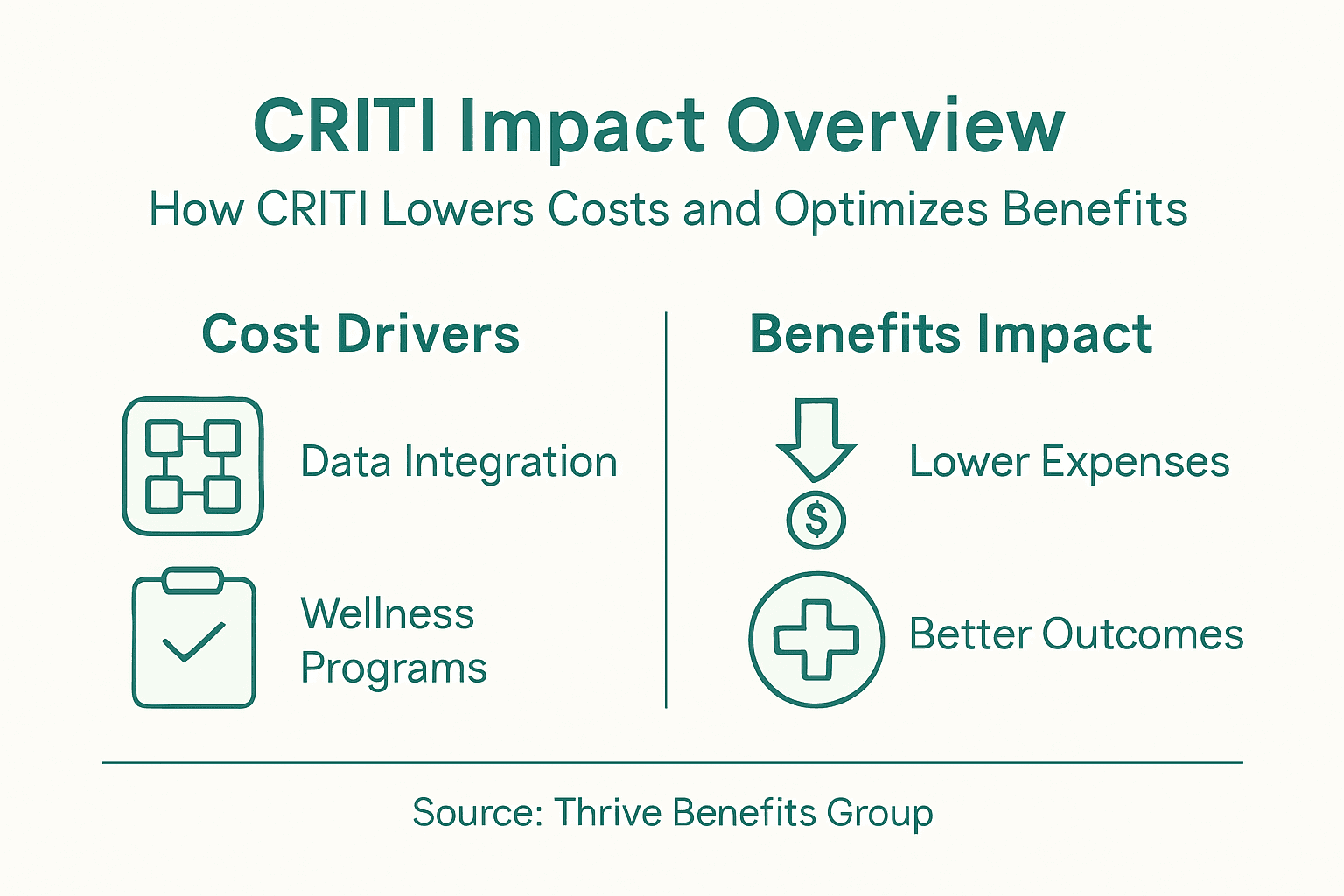
The primary mechanisms for lowering healthcare costs through CRITI strategies include comprehensive data integration, targeted wellness interventions, and strategic plan redesign. By democratizing health data and creating transparent evaluation frameworks, organizations can identify high-cost areas and implement precise interventions. These strategies focus on preventing chronic disease management, reducing unnecessary medical procedures, and promoting employee wellness through integrated digital health platforms that track and improve overall population health.
Advanced CRITI approaches leverage sophisticated analytical tools to align cost reduction with quality healthcare delivery. This involves creating collaborative structures that connect financial, operational, and clinical data streams, enabling employers to make informed decisions about benefit design. By implementing personalized health management programs, organizations can effectively reduce long-term healthcare expenses while simultaneously improving employee health outcomes and organizational productivity.
Pro tip: Develop a comprehensive health data dashboard that tracks key wellness metrics and provides real-time insights into potential cost-saving opportunities across your employee population.
Legal, Compliance, and Eligibility Requirements
CRITI program implementation demands rigorous adherence to complex legal frameworks governing employee benefits and organizational responsibilities. Employee benefits compliance involves multiple federal regulations that organizations must carefully navigate to avoid significant financial and legal risks. These regulations encompass critical areas including workplace protections, health insurance standards, and employee rights across different employment classifications.
The primary legal considerations for CRITI programs include compliance with key federal statutes such as the Affordable Care Act (ACA), Employee Retirement Income Security Act (ERISA), Family and Medical Leave Act (FMLA), Consolidated Omnibus Budget Reconciliation Act (COBRA), and Health Insurance Portability and Accountability Act (HIPAA). Each of these regulations establishes specific requirements for benefit design, eligibility criteria, reporting standards, and employee protections. Organizations must develop comprehensive compliance strategies that account for nuanced legal distinctions across different employee categories, including full-time, part-time, contract, and seasonal workers.
The table below highlights major federal statutes affecting CRITI program compliance:
Federal Statute | Area Governed | Relevance to CRITI Programs |
ACA | Health insurance mandates | Sets minimum coverage requirements |
ERISA | Retirement and benefits | Regulates plan management and reporting |
FMLA | Leave policies | Ensures job-protected medical leave |
COBRA | Continuation coverage | Lets employees extend health benefits |
HIPAA | Medical data privacy | Mandates protection of health data |
Eligibility requirements represent a critical component of legal compliance in CRITI programs, demanding meticulous documentation and transparent communication. Employers must establish clear, consistent criteria for benefit participation that align with both legal mandates and organizational policies. This involves creating precise definitions of employee status, tracking service hours, managing waiting periods, and ensuring equitable access to benefits across diverse workforce segments. Successful implementation requires robust record-keeping systems, regular compliance audits, and proactive adaptation to evolving regulatory landscapes.
Pro tip: Conduct quarterly comprehensive compliance reviews to identify potential regulatory gaps and update your CRITI program documentation accordingly.
Cost Savings and Common Implementation Challenges
CRITI strategies provide organizations with sophisticated approaches to managing employee benefits while simultaneously addressing critical cost containment objectives. Strategic benefits design can significantly reduce organizational expenses by aligning compensation packages with precise workforce needs and operational constraints. These comprehensive approaches go beyond traditional cost-cutting methods, focusing on creating value-driven benefit structures that balance financial prudence with employee satisfaction.
The primary implementation challenges for CRITI programs revolve around navigating complex regulatory environments, managing diverse workforce expectations, and developing adaptive benefit frameworks. Organizations must contend with rising healthcare costs, evolving workforce demographics, and the need for personalized benefit solutions. Key challenges include creating flexible benefit structures that accommodate different employee categories, ensuring compliance with changing legal requirements, and developing data-driven approaches that can dynamically adjust to organizational and employee needs.
Successful cost savings through CRITI strategies require a holistic approach that integrates data analytics, strategic planning, and continuous performance monitoring. This involves developing sophisticated tracking mechanisms that assess benefit utilization, employee engagement, and overall program effectiveness. Organizations must create robust feedback loops that allow for rapid iteration and optimization of benefit programs, ensuring that cost-saving measures do not compromise employee satisfaction or organizational competitiveness.
Pro tip: Implement a quarterly benefits utilization review process that combines financial analysis with employee feedback to identify potential cost optimization opportunities.
Unlock Smarter Employee Benefits with CRITI Expertise
Facing the growing challenges of reducing healthcare costs and ensuring legal compliance requires more than just traditional approaches. The article highlights how CRITI strategies can revamp employee compensation by integrating data-driven insights and flexible program designs. If you are struggling with rising benefit expenses or the complexity of regulatory requirements you are not alone. Employers need solutions that balance cost savings while boosting employee satisfaction and retention.
Discover how partnering with expert employee benefits brokers can transform your approach. At Thrive Benefits Group we specialize in crafting customized, cost-effective CRITI programs that meet your workforce’s unique needs. Our proven strategies help you control healthcare spending, enhance workforce engagement, and ensure compliance with federal laws. Don’t wait until costs spiral out of control take the first step towards optimized benefits today. Visit Thrive Benefits Group to learn more and schedule a consultation that will redefine your benefits strategy.
Frequently Asked Questions
What does CRITI stand for in the context of employee benefits?
CRITI stands for a framework that analyzes and optimizes employee compensation strategies within organizational benefit structures, focusing on comprehensive reward systems that enhance worker motivation and retention.
How can CRITI strategies help lower healthcare costs for organizations?
CRITI strategies lower healthcare costs through data integration, targeted wellness interventions, and plan redesigns, prioritizing preventive care and personalized health management to reduce long-term expenses.
What are the key components of CRITI programs for employers?
Key components of CRITI programs include recognition-based initiatives, professional development tracks, and performance-aligned compensation strategies tailored to motivate employees and align their achievements with organizational goals.
What legal considerations are involved in implementing CRITI programs?
Legal considerations for CRITI programs include compliance with federal laws such as the Affordable Care Act (ACA), Employee Retirement Income Security Act (ERISA), and the Family and Medical Leave Act (FMLA), which govern benefit design and employee protections.
Recommended