
Employee Retention and Benefits: Cost-Saving Strategies
- Sydney Little
- Jan 16
- 7 min read


Staff turnover can cost American organizations more than $1 trillion annually, exposing nonprofits and assisted living facilities in the Southeast to severe risks. When dedicated team members leave, operational costs climb and workplace morale suffers. For HR managers juggling tight budgets, refining benefits and retention strategies becomes critical to sustaining quality care and community impact. This guide reveals proven methods to help your workplace keep talented employees motivated and connected for the long term.
Table of Contents
Key Takeaways
Point | Details |
Employee retention is multifaceted | Organizations must create supportive environments to retain talent, addressing both professional and personal needs through comprehensive benefits packages. |
Nonprofits need creative strategies | Due to unique workforce dynamics, nonprofit organizations should implement innovative retention strategies that go beyond traditional compensation methods. |
Legal compliance is essential | Organizations must navigate employment regulations carefully to develop retention strategies that are both compliant and protective of employee interests. |
Financial implications matter | Understanding the hidden costs of employee turnover can help organizations prioritize retention investments, leading to greater long-term stability and effectiveness. |
Defining Employee Retention and Benefits
Employee retention represents an organization’s ability to keep talented workers engaged and committed to their roles over extended periods. In the complex landscape of human resources, retention goes far beyond simply preventing staff turnover. It encompasses strategic approaches that create positive workplace environments where employees feel valued, supported, and motivated to contribute their best work.
At its core, employee retention involves understanding and addressing the multifaceted needs of workers through comprehensive benefits packages. These packages typically include not just monetary compensation, but also professional development opportunities, workplace flexibility, and comprehensive health insurance. Government retention strategies highlight that successful programs extend well beyond traditional financial incentives.
Nonprofit and assisted living organizations face unique retention challenges, requiring creative strategies tailored to their specific workforce dynamics. Effective retention approaches often integrate holistic support systems that recognize employees’ professional and personal needs. This might include career advancement pathways, mental health resources, flexible scheduling, and meaningful recognition programs that demonstrate genuine appreciation for staff contributions.
Pro Tip: Conduct quarterly stay interviews with team members to proactively understand their workplace satisfaction and identify potential retention risk factors before they become critical issues.
Types of Benefits for Nonprofit Employees
Nonprofit organizations must craft strategic benefits packages that balance organizational budget constraints with meaningful employee support. Unlike traditional corporate environments, these organizations often rely on creative compensation strategies that extend beyond monetary rewards. Nonprofit compensation benchmarks reveal that successful packages integrate multiple benefit dimensions to attract and retain dedicated professionals.
The most critical benefits for nonprofit employees typically include comprehensive health insurance, retirement savings plans, and professional development opportunities. Health coverage remains a top priority, with many organizations offering robust medical, dental, and vision plans. Retirement benefits like 403(b) plans provide long-term financial security, while flexible spending accounts and health savings options help employees manage healthcare expenses more effectively.
Beyond traditional financial benefits, nonprofits increasingly emphasize quality-of-life enhancements. These include flexible work schedules, remote work options, mental health resources, wellness programs, and meaningful professional growth opportunities. Paid time off, career development funding, and employee assistance programs demonstrate organizational commitment to staff well-being and personal advancement.
Pro Tip: Conduct an annual benefits satisfaction survey to understand which offerings most resonate with your specific workforce and identify potential improvements that could enhance retention.
Key Features of Innovative Retention Strategies
Innovative retention strategies transcend traditional human resources approaches, focusing on creating holistic workplace environments that genuinely engage and motivate employees. Leadership communication strategies reveal that successful organizations prioritize meaningful connections between management and staff, transforming workplace dynamics from transactional to inspirational.

Effective retention strategies typically incorporate multiple interconnected components. Transparent communication stands as a foundational element, ensuring employees feel informed, valued, and connected to organizational goals. This involves regular feedback mechanisms, clear performance expectations, and open channels for dialogue. Professional development opportunities, personalized career pathways, and meaningful recognition programs further reinforce an employee’s sense of purpose and potential within the organization.
Motivational frameworks play a critical role in retention, moving beyond monetary compensation to address deeper psychological needs. This includes creating a supportive work culture that emphasizes work-life balance, provides mental health resources, and offers flexible working arrangements. Implementing mentorship programs, encouraging cross-departmental collaboration, and developing robust employee wellness initiatives can significantly enhance organizational commitment and reduce turnover rates.
Pro Tip: Implement a quarterly “stay interview” program to proactively understand employee motivations and address potential retention risks before they escalate.
Here’s a summary comparing traditional and innovative retention strategies:
Aspect | Traditional Approach | Innovative Approach |
Focus | Basic compensation | Employee engagement |
Communication | Top-down, limited feedback | Transparent, two-way dialogue |
Benefits | Standard health and retirement | Flexible, holistic packages |
Development | Occasional training | Personalized career paths |
Culture | Transactional | Supportive, purpose-driven |
Legal Requirements and Compliance Considerations
Navigating the complex landscape of legal requirements demands meticulous attention to detail and comprehensive understanding of employment regulations. International employment law frameworks provide critical guidance for organizations seeking to develop robust, compliant employee retention strategies that protect both employer and employee interests.
Key legal considerations encompass multiple dimensions of workforce management. Mandatory compliance areas include anti-discrimination policies, minimum wage regulations, workplace safety standards, and equitable hiring practices. Nonprofit organizations must particularly focus on maintaining transparent documentation of employment contracts, benefits structures, and compensation policies. This involves carefully crafting job descriptions, establishing clear performance metrics, and ensuring all compensation and benefit offerings align with federal and state employment regulations.
Beyond basic legal requirements, organizations must proactively address emerging workplace protection standards. This includes developing comprehensive policies around workplace flexibility, remote work arrangements, mental health support, and accommodations for diverse employee needs. Effective compliance strategies require regular legal audits, ongoing staff training, and adaptive policies that respond to evolving employment law landscapes. Implementing robust record-keeping systems, conducting periodic policy reviews, and maintaining open communication channels can help mitigate potential legal risks.
Pro Tip: Consult with an employment law specialist annually to review and update your organization’s policies, ensuring ongoing legal compliance and risk management.
Cost Implications and Hidden Risks
Understanding the financial landscape of employee retention requires a nuanced approach that goes beyond surface-level calculations. Hidden costs of employee attrition reveal a complex web of financial implications that can dramatically impact an organization’s bottom line and operational effectiveness.
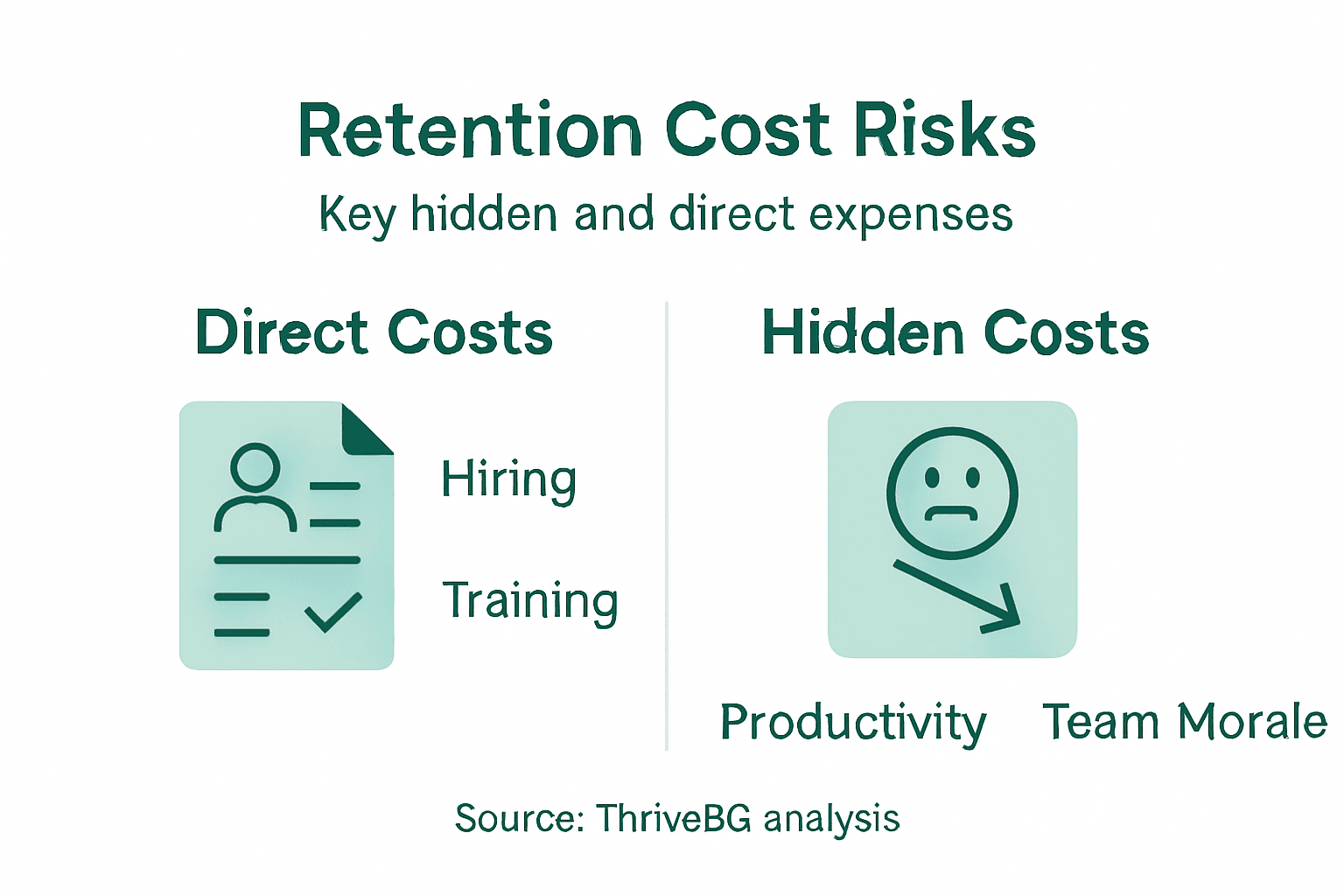
The most significant hidden risks emerge through direct and indirect productivity losses. Organizational disruption occurs when experienced employees depart, creating knowledge gaps that can take months or even years to rebuild. Recruitment and training expenses represent only the tip of the iceberg. Additional costs include reduced team performance, decreased institutional knowledge, potential customer relationship disruptions, and the intangible impact on remaining team members’ morale and engagement.
Financial strategies must account for comprehensive retention investments that mitigate long-term risks. Nonprofits and assisted living facilities should develop robust mathematical models that calculate total talent replacement costs, including recruitment, training, productivity loss, and potential service quality degradation. Implementing proactive retention programs, investing in employee development, and creating supportive workplace cultures can ultimately prove more economically advantageous than continually cycling through new staff members.
Pro Tip: Develop a comprehensive talent replacement cost calculator that captures both direct and indirect expenses to make more informed retention investment decisions.
Mistakes to Avoid When Designing Benefits
Designing employee benefits requires strategic precision and thoughtful consideration of organizational goals and workforce diversity. Employee benefits design challenges reveal complex pitfalls that can undermine even the most well-intentioned compensation strategies, particularly for nonprofit and assisted living organizations with limited resources.
Benefit design mistakes often stem from a one-size-fits-all approach that fails to recognize the unique needs of different employee segments. Common errors include overlooking generational preferences, neglecting flexible work arrangements, and creating benefit structures that do not align with organizational culture. Nonprofits must carefully balance cost constraints with meaningful support, avoiding token gestures that appear supportive but provide minimal actual value to employees.
Effective benefit design requires comprehensive, nuanced strategies that go beyond traditional compensation models. Organizations must develop adaptable frameworks that can accommodate diverse workforce needs, including varying age groups, family structures, and professional development aspirations. This involves conducting regular employee surveys, maintaining open communication channels, and continuously reassessing benefit packages to ensure they remain relevant, competitive, and aligned with evolving workplace expectations.
The following table highlights mistakes in benefits design and their business impact:
Mistake | Common Cause | Business Impact |
Ignoring workforce diversity | One-size-fits-all mindset | Reduced engagement, increased turnover |
Overlooking flexibility | Sticking to rigid schedules | Lower satisfaction, less retention |
Neglecting feedback | Lack of employee input | Outdated benefits, wasted resources |
Cost over value focus | Pure budget consideration | Benefits unused, morale decrease |
Pro Tip: Conduct anonymous employee surveys at least twice annually to gather candid feedback about current benefit offerings and identify potential improvement areas.
Unlock Smarter Employee Retention and Benefits with ThriveBG
Employee retention challenges are more than just about compensation. The article highlights critical pain points like balancing cost-saving strategies while offering flexible and meaningful benefits that truly engage employees. Concepts such as holistic workplace environments, transparent communication, and innovative benefit packages require careful design to avoid hidden risks that drain budgets and morale.
At ThriveBG, we understand how difficult it is to maintain robust employee benefits that reduce turnover without breaking the bank. Our expert brokers specialize in crafting tailored cost-saving solutions that align with your organization’s unique needs. Whether you face nonprofit budget constraints or want to minimize the hidden costs of attrition, ThriveBG offers expert guidance to help you implement benefits that empower your workforce and protect your bottom line.
Take the next step now to transform your retention approach. Visit our landing page to discover how thoughtful benefits design and strategic cost management can drive lasting employee loyalty. Don’t wait until turnover impacts your team and finances. Partner with ThriveBG today and start saving while keeping your employees motivated and supported.
Frequently Asked Questions
What are employee retention strategies?
Employee retention strategies are approaches organizations use to keep talented employees engaged and committed to their roles. These strategies often encompass understanding employee needs through comprehensive benefits packages, professional development, workplace flexibility, and supportive environments.
Why is employee retention important for organizations?
Employee retention is crucial as it helps reduce turnover costs, maintains institutional knowledge, and boosts team morale. High retention rates lead to a more stable workforce, ensuring continuity in service and better organizational performance.
What types of benefits can help with employee retention?
Benefits that can enhance employee retention include comprehensive health insurance, retirement savings plans, professional development opportunities, flexible work schedules, mental health resources, and wellness programs. Tailoring benefits to meet diverse employee needs is vital for effectiveness.
What mistakes should organizations avoid when designing employee benefits?
Common mistakes include adopting a one-size-fits-all approach, overlooking employee feedback, and neglecting flexible work arrangements. These errors can lead to reduced engagement and increased turnover, making it essential to develop adaptable and relevant benefit packages.
Recommended



Comments